Moschin
I collaborated with Frank, Kian, and Claudia (links below) during the early design phase of this level. I was ultimately responsible for the final layout, blockout, and the majority of the set dressing. Claudia contributed significantly to developing the visual formula for the trench networks, as Col Moschin is geographically close to another level and we wanted to maintain visual and structural consistency between the two environments.
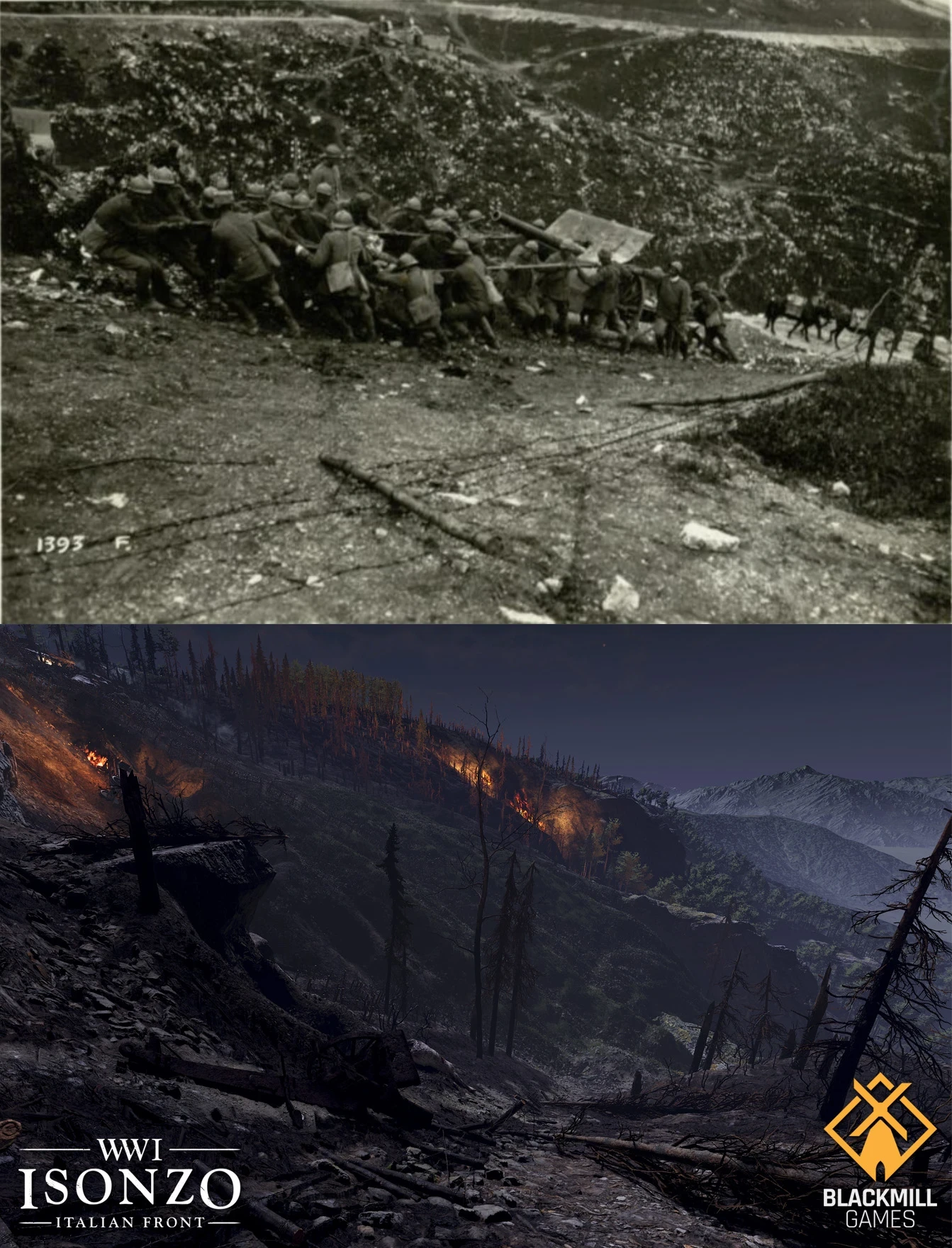
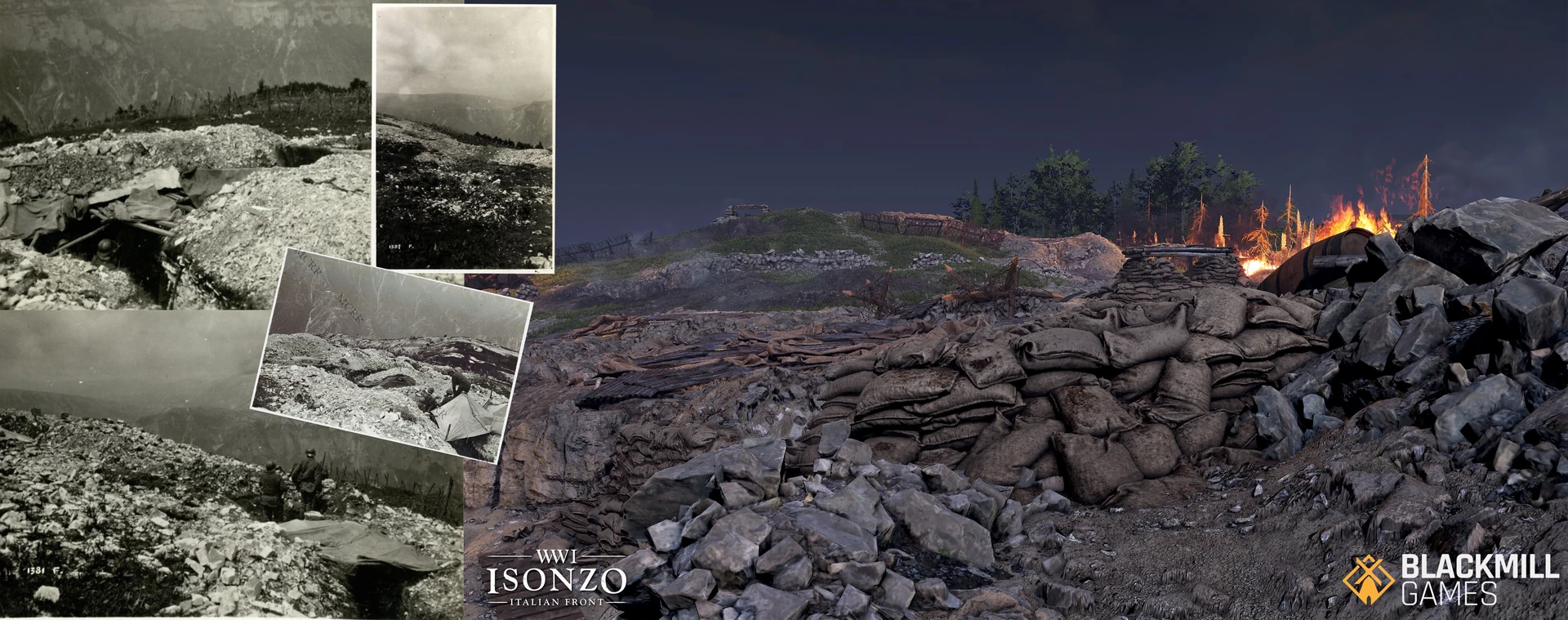
To ground the design in reality, I relied heavily on historical trench network maps and firsthand accounts when recreating the battlefield. I also rebuilt several real World War I photographs within the level, and have included side-by-side comparisons to demonstrate how those references were translated into a playable space.
For gameplay reasons, the real-world scale of the area was intentionally reduced. This allowed us to preserve authenticity while avoiding excessive traversal time and ensuring the level remained engaging rather than feeling like a walking simulator.
Moschin was the final level created for Isonzo, and it was also the first night-time level developed for the game. This introduced additional challenges related to readability, atmosphere, and combat flow.
The primary goal of Moschin was to deliver a night engagement that stayed true to the proven gameplay formulas established by earlier levels, while avoiding common pitfalls associated with night maps - most notably poor visibility. To improve player readability, we used fires as localized light sources in darker areas and relied on moonlight to maintain overall visibility without flattening the atmosphere.
One of the central challenges was striking the right balance between clarity and mood. Ensuring the level felt unmistakably like a night map while remaining playable and enjoyable required careful iteration. This challenge was addressed through close collaboration with Frank, our art director, and lighting was continuously tuned throughout development to maintain that balance.
As a team, BlackMill excels at playtesting and iteration. We conducted extensive testing over time to evaluate feel, flow, and readability, which helped me develop a strong understanding of what was needed and where. Feedback from these sessions was invaluable in identifying what to avoid, what required improvement, and where adjustments could be made to refine combat pacing and the overall player experience.
Another key challenge was establishing clear visual themes and contrast across the level. I focused on creating distinct areas with strong identities, ensuring each space had recognizable visual cues that helped players quickly orient themselves within the battlefield. These thematic areas acted as clear points of reference and significantly improved level readability.
Each area was designed with specific gameplay roles in mind, including varied cover density, flanking opportunities, and concealment options. Engagement ranges were intentionally varied to prevent combat from feeling uniform and to encourage different tactical approaches as players progressed through the level. This contrast culminated at the final objective, where combat intensity was deliberately increased through tighter spacing, layered defenses, and heightened pressure to create a strong sense of climax.
Thanks:
https://www.artstation.com/claudia_taika28
https://www.artstation.com/baardus
https://www.artstation.com/frankvanhalteren